Milk Teeth of the City
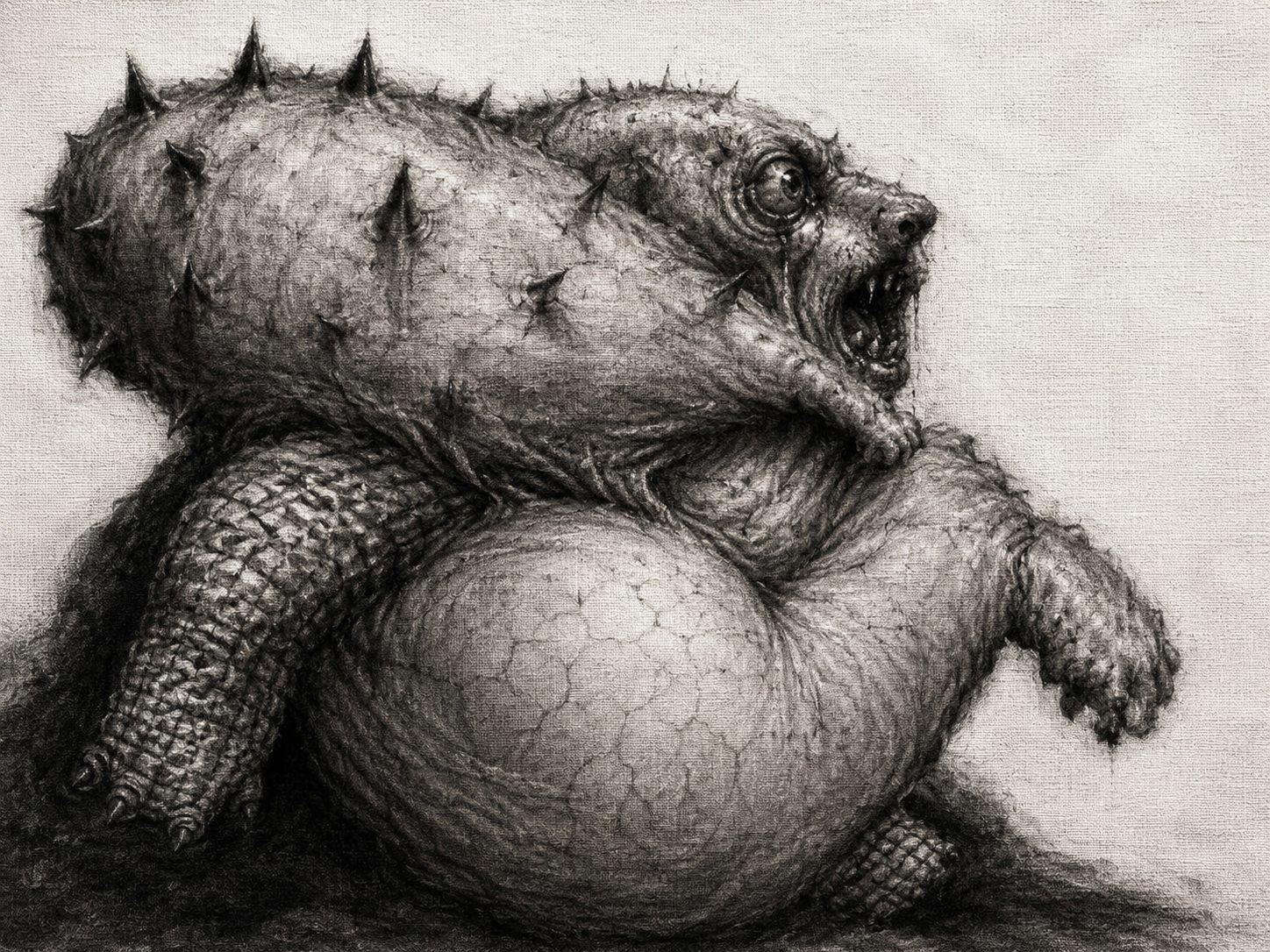
THIS IS A WORK OF FICTION
On the morning Ramji Prasad broke the tram-stop bench with his bare hands, Calcutta was doing what it did best: pretending catastrophe was only a delay.
Rainwater stood ankle-deep near the crossing at Belgachia, greenish and patient, carrying sachets, flower stems, a drowned matchbox, one small plastic Ganesh with the paint washed off its face. Above the road, tram wires drew black lines through the pale sky. Tea glasses clinked at Bapi’s stall. A man in a faded Argentina jersey argued with a fish seller about hilsa as if international law were involved. The Metro announcement floated up from underground, oddly polite, apologizing for inconvenience without mentioning what inconvenience meant in a city where inconvenience had taken permanent tenancy.
Ramji arrived every morning at six-thirty with two aluminum cans of milk tied to the back of his cycle. He was from Ara, though after twelve years in Calcutta he had acquired the city’s minor habits: he said “dekhi” instead of “dekhte hain,” distrusted new buildings, and considered tea without enough milk a form of moral decline. He lived in a mezzanine room above a shuttered coaching center with his wife, Phoolmati, and their son Chotu, who wore shoes with red lights that blinked long after the child had stopped running.
He was not an impressive man. This was important later because everyone wanted to pretend he had been one.
Before the milk, he was narrow-shouldered, tidy, almost shy. His hair was parted with water. He sent money home every month, called his mother every Sunday, and never sat while an older man stood. He wanted only three things: to buy a small secondhand fridge for Phoolmati, to put Chotu in an English-medium school where the children said “sorry” instead of pushing, and to stop being called “Bihari” in the voice people used for blocked drains.
Calcutta can be tender to outsiders in private and vicious to them in public. It will feed you, employ you, borrow salt from you, trust you with its children, then laugh at your accent in the tea stall. Respectability here was not a virtue but a performance, and everyone, from the gated-tower accountant to the barefoot delivery boy, performed until their bones clicked.
Ramji’s new habit began at the wholesale lane behind the market, where milk came before dawn in blue crates and no one asked too many questions if the rate was low enough. The pouches were marked SHUDDHO GOLD, with a smiling cow wearing a crown. The print was blurred. The milk inside was thick, sweet, and faintly warm even after refrigeration.
“Good fat,” the dealer told him. “You drink one glass, you work like machine.”
Ramji laughed. “Machine cannot pay school fees.”
Still, he drank.
At first, the change looked like prosperity. His cheeks filled out. His shirt strained. The para aunties noticed and approved. In Bengal a man gaining weight is treated as a solved problem, evidence that some competent female has been managing the kitchen. Phoolmati, who had been begging him to eat more for years, began to worry only when his appetite became theatrical. He drank milk at midnight from a steel tumbler, standing in the dark, the refrigerator open, light falling across his belly like a stage lamp.
“You will burst,” she said.
“Let me burst,” he replied, not angrily. Almost happily.
Two weeks later he slapped a delivery rider outside the pharmacy for brushing his cycle.
The rider, a boy with acne and a helmet visor cracked like old ice, raised both hands. “Dada, sorry, sorry.”
Ramji stepped toward him. His breathing had changed. It came through his nose in wet bursts. His eyes were not wild; they were worse. They were simple.
Bapi pulled him back. “Oye, what happened to you? Your sugar gone high?”
Ramji blinked. The rainwater around his ankles trembled with passing buses.
“He touched my thing,” Ramji said.
“What thing?”
“My thing.”
Nobody knew what he meant.
By Durga Puja, he was enormous. Not merely fat, not the soft parliamentary obesity of office uncles, but swollen in a way that suggested the body had received bad instructions and was following them with rural sincerity. His wrists thickened. His neck vanished. Hair grew along his shoulders in a dark cape. His forehead seemed lower, though perhaps that was imagination, because once people begin to fear a man they also begin to redraw him.
He stopped shaving. He stopped sending money home. He stopped calling his mother.
At night the neighbors heard him moving furniture in the mezzanine room. Phoolmati told people he had acidity. Chotu stopped wearing the blinking shoes.
The first real injury happened beside the old cinema wall near Hatibagan, where peeling posters advertised a detective film no one had watched and a coaching center promised government jobs with the confidence of a priest selling heaven. A retired school clerk named Bhuban Babu was found with three broken ribs and a fractured jaw. He said Ramji had hit him with a wooden plank after Bhuban complained about milk watered thin.
“Did he say anything?” asked Sub-Inspector Mira Dutta.
Bhuban’s face was purple on one side. He spoke through gauze. “He made a sound.”
“What kind?”
The old man looked embarrassed. “Like calling cattle.”
Mira Dutta wrote this down without expression.
She was thirty-nine, unmarried in a way relatives considered a civic failure, and tired enough to suspect exhaustion had become her permanent personality. She had a mother in a nursing home near Lake Town, a brother in Pune who sent advice instead of money, and a service revolver she cleaned more often than she used. Her private wound was not loneliness exactly, but the insult of being useful to everyone and cherished by no one.
She first saw Ramji on CCTV from a cheap café. The footage showed a large man in a dirty vest walking past stacks of clay cups. Nothing unusual, except for his gait. He did not walk like a drunk or a patient. He placed his feet with blunt authority, heel first, shoulders forward, head lowered. A man with errands. A man with weather inside him.
Then he turned toward the camera.
Mira paused the video.
His mouth was shining with milk.
“Madam?” said Constable Nirmal.
“Find his supplier.”
“Milk supplier?”
“What else? Goat astrologer?”
Nirmal grinned, then stopped when he saw her face.
The supplier had vanished, leaving behind three crates of SHUDDHO GOLD and a ledger full of false names. The wholesale lane gave up information in small, offended pieces. A porter said the pouches came from a warehouse near Dankuni. A driver said maybe Basirhat. A shopkeeper said everyone bought them because branded milk had become expensive and customers wanted thick tea at thin prices. One must admire the Indian economy: it can counterfeit nourishment itself and still call the margin tight.
Mira sent the pouches to a municipal lab. The first report said high solids, vegetable fat, urea, starch, detergent traces. Ordinary crime. Calcutta had been drinking fraud for decades; this was merely fraud with better packaging.
Then Ramji disappeared.
Phoolmati came to the station with Chotu asleep against her shoulder. Her sari smelled of damp clothes and fear.
“He took Baba’s hammer,” she said.
“Your father’s?”
“His father’s. From village. Old hammer for breaking stone.”
“When?”
“Night. During power cut.”
The power cut had taken the neighborhood at 1:12 a.m. Fans slowed. Inverters beeped. Apartment windows lit with phone screens, hundreds of small bluish faces floating above the lane like ghosts who had learned scrolling. In that darkness Ramji had opened the wooden trunk under the bed, taken the hammer, and gone out.
“Did he speak?”
Phoolmati looked at the floor. “He called me by another name.”
“What name?”
“I don’t know. Not a name. A sound.”
Mira felt then, absurdly, that the city had turned its head slightly.
They found Ramji two days later under the Tala bridge, where the concrete smelled of urine, dust, and old rain. He had changed the hammer. Nails had been driven through a thick wooden handle lashed to it with electrical wire and torn cloth, making a crude mace. It looked both childish and ancient, like something invented before language and again after unemployment.
Around him lay three injured men, one dead dog, and a taxi windshield powdered into glitter. Ramji was squatting by a drain, eating raw eggs from a stolen tray. He cracked them against his teeth.
“Ramji Prasad,” Mira called.
He looked up.
For one second she saw recognition pass through his face like a fish under dirty water.
“Didi,” he said.
Then he charged.
Later the official report would say police used minimum force. This was false, though not entirely immoral. It took six officers, two lathis, one tranquilizer dart borrowed illegally from the zoo, and Mira’s revolver fired into the air to stop him. Even drugged, he kept trying to rise. His hand closed around a constable’s ankle with such force the bone cracked.
At the hospital, Dr. Ishan Sen asked if the man had used steroids.
“Milk,” Mira said.
The doctor removed his glasses. He had the long, sad face of a man who had spent too many years translating bodies into bills. “Milk does many things, Inspector. It does not usually return a man to the Pleistocene.”
“He has killed one person.”
“Then perhaps the Pleistocene has returned to him.”
Ishan worked at RG Kar and privately at a diagnostic center with golden lettering and dead plants in the reception area. He was a good doctor who had become a compromised one by installments: a referral commission here, a silence there, an unnecessary scan written in the elegant handwriting of survival. His daughter was studying in Singapore. His father needed dialysis. Morality, like milk, had different rates depending on purity.
Ramji’s bloodwork made no sense. His testosterone was high but unstable. Growth markers surged and collapsed. Inflammatory signals filled the report like red flags after a student protest. His jawbone had thickened. His canine teeth were slightly loosened, then re-rooting at altered angles. Most disturbing was not the growth but the loss. His vocabulary, according to Phoolmati, had fallen day by day. First he stopped saying full sentences. Then he stopped using future tense. Then he stopped using “I.”
“Can poisoning do this?” Mira asked.
Ishan did not answer immediately.
Outside the ward, relatives slept on newspapers. A man argued with a billing clerk. Somewhere a child coughed with the stubborn rhythm of a machine that wanted repair. Hospitals in Calcutta had a special talent for revealing society without metaphor: the rich went upstairs, the poor waited, the middle class calculated how much dignity could be sacrificed before discharge.
“I saw two similar cases,” Ishan said finally.
“When?”
“Last week. One in Nagerbazar. One near Garia.”
“And you did not report?”
“To whom? The Department of Unusual Cavemen?”
Mira stared at him.
He rubbed his eyes. “One was a gym trainer. One was a sweet-shop worker. Both with sudden weight gain, aggression, language deterioration. Families said they were drinking some high-fat milk. I thought contaminated hormone mixture. Black market bodybuilding nonsense.”
“Where are they now?”
“One died. One left against medical advice.”
“Left?”
“His brothers took him. They were afraid of the bill.”
Mira thought of Phoolmati’s face, Chotu’s shoes no longer blinking.
“Show me the reports.”
The municipal lab’s second test came after a professor at Jadavpur, called by a friend of a friend, noticed something odd in the protein fraction. It was not only adulteration. Mixed into the milk solids was a delivery system: lipid nanoparticles, crude but effective, carrying fragments of synthetic RNA. Not elegant biotech. Street biotech. Cheap, unstable, dirty. The kind of thing that should not exist until one remembered that humanity had given itself the internet, gene editing, and hunger at the same time, then acted surprised when they met in a plastic pouch.
“What does it do?” Mira asked.
The professor, a small woman with silver hair and the impatient manner of a ceiling fan regulator, tapped the report.
“Possibly triggers dormant developmental pathways. Muscle growth. Bone remodeling. Endocrine disruption. Neural regression.”
“Regression to what?”
The professor gave her a look. “Inspector, evolution is not a staircase. There is no caveman switch. But the body has old rooms. This appears to open doors badly.”
“Who made it?”
“Someone educated enough to be dangerous and poor enough to be available.”
By then the city had begun to bruise.
The second public attack happened at Shyambazar, under the five-point crossing where buses breathed smoke into each other’s faces and the statue of Netaji pointed onward as if still hoping traffic might obey. A man with a bamboo pole shattered a fruit cart, then dragged a cyclist by the hair. He was not Ramji. He was leaner, younger, wearing a Swiggy shirt stretched across a newly swollen back.
The third happened near Esplanade Metro. A woman, large as a wrestler, broke the glass door of a mobile shop because the ringtone from inside would not stop. She howled when police lights flashed.
Then came a video from Behala: three men moving together through rain, carrying iron rods, sniffing at shuttered shops. Another from Sealdah: a crowd running while someone off camera laughed until the laughter became screaming. Another from a gated tower in New Town, where a software engineer who ordered almond milk and spoke only in quarterly goals began biting the sofa cushions before attacking the security guard.
The word “caveman” appeared first as a joke online.
By evening it was a headline.
By night it was a prayer.
The government announced there was no cause for panic, which caused panic with admirable efficiency. Milk vanished from shelves. Tea stalls served black tea and looked ashamed. Mothers poured milk into drains while grandmothers shouted that wasting food invited gods of a sort nobody believed in until plumbing failed. Political posters appeared overnight blaming opposition sabotage, foreign conspiracy, migrant habits, corporate greed, and moral decay, which covered most possibilities except incompetence.
Mira and Ishan traced SHUDDHO GOLD to a warehouse in a half-built industrial park near Dankuni. Rain came down hard that afternoon, flattening dust, silvering the ribs of unfinished buildings. Inside the warehouse they found pouching machines, sacks of skimmed milk powder, vegetable fat drums, veterinary hormones, and a locked cold room humming on backup power.
In the cold room were freezers labeled with numbers.
Also a laptop.
Also seventeen crates marked not SHUDDHO GOLD but P.A.L.
Ishan opened a file. His face changed.
“What?” Mira asked.
He turned the screen toward her.
The document header read: PRIMAL ADAPTIVE LACTATION — FIELD STABILITY TRIAL.
Below it were tables of distribution zones: Belgachia, Garia, Nagerbazar, Behala, New Town, Sealdah. Target groups: high physical labor, low legal visibility, high milk consumption, low complaint probability.
Mira read the phrase twice.
Low complaint probability.
It was a perfect bureaucratic obscenity. Not poor people. Not migrants. Not workers. Low complaint probability. A category into which the city put anyone whose suffering made no sound in air-conditioned rooms.
“Who funded this?” she said.
Ishan scrolled.
The sponsor name was hidden behind shells and initials, but one logo appeared in a corner: a stylized white cow inside a blue shield. Mira knew it. Everyone knew it. The same company supplied fortified nutrition drinks to schools, protein powders to gyms, hospital supplements to private wards, and election-season charity packets to slums.
Ishan sat down slowly.
“What?” Mira said.
“I signed a safety review for them.”
“When?”
“Three years ago. For a nutritional additive. Pediatric. Nothing like this.”
“You knew?”
“No.” Then, quieter: “I knew enough not to ask.”
In the next room something knocked against metal.
They froze.
The knocking came again.
Mira raised her gun. Ishan lifted a crowbar, looking ashamed of the theatricality. Behind a stack of crates they found the missing sweet-shop worker, alive, naked except for torn trousers, chained to a pipe. His body was huge, hair-matted, shivering. Around him were empty milk pouches licked flat.
He looked at Mira with wet, pleading eyes.
“Water,” he said.
Then another voice from the dark said, “Water.”
Not echo. Answer.
There were six more in the warehouse.
No, seven.
One was a child.
The city broke after that, not all at once but in neighborhoods, the way old plaster falls: first a crack, then powder, then a slab large enough to kill. Milk had already moved through tea, sweets, lassi, school tiffins, hospital diets, gym shakes, cheap ice cream sold outside tuition centers. What people thought of as individual appetite had been a distribution network.
In north Calcutta, old houses bolted their green shutters. In Salt Lake, residents’ groups formed patrols with cricket bats and moral superiority. At Kalighat, devotees stepped around a man crouched beside the temple wall, chewing marigolds. In shopping malls, escalators carried nobody while announcements welcomed valued customers to empty floors. Local trains ran packed with people escaping one rumor into another.
Ramji died on the fourth day.
Phoolmati did not cry at first. She stood beside the hospital bed while Chotu hid behind her sari. Ramji’s body had shrunk in death, or seemed to. The violence had gone out of him, leaving only a tired man with cracked lips and milk-white residue at the corners of his mouth.
“He was good,” she said.
Mira nodded.
“No one will say,” Phoolmati continued. “They will say Bihari madman. They will say animal.”
“I will say.”
Phoolmati looked at her with pity. “Who listens to police?”
It was the cruelest thing anyone had said to Mira because it was not meant cruelly.
That evening, Mira took Chotu to Bapi’s stall because the child would not leave the hospital gate. There was no milk for tea. Bapi served liquor tea in glass cups, thin and bitter.
Chotu held his with both hands though it was too hot. His shoes blinked once under the bench, then stopped.
“Your father loved you,” Mira said.
The boy looked at the road. “He forgot my name.”
“No. The sickness made him forget.”
“Will Ma forget?”
“No.”
“Will I?”
Mira had no talent for lying to children. This made her less comforting but more respectful.
“I don’t know,” she said.
Across the street, a new poster had been pasted over an old political slogan. It showed a smiling family drinking from white cups. PURE STRENGTH FOR A NEW INDIA. Someone had scratched out the eyes.
By the seventh day, the official number of cases was 312. Unofficially, Ishan estimated thousands. The symptoms varied. Some became violent. Some only grew silent and heavy, sitting on balconies through the rain, sniffing the air. Some recovered halfway and remained trapped in a damaged present, able to remember bank passwords but not daughters’ birthdays. The city acquired a new sound at night: not sirens, not dogs, but low calls from lanes and rooftops, answered across neighborhoods.
Then the final report arrived.
Mira read it in the station during another power cut, sweating through her shirt while the inverter failed one tube light at a time. Ishan stood beside her. Outside, men shouted near the market. A helicopter moved over the city, invisible in cloud.
The professor had found the trigger.
“It wasn’t cumulative,” Ishan said.
Mira read silently.
“What does that mean?” she asked, though she understood.
He swallowed. “The milk did not cause the change by itself. It activated only in people with prior exposure to the primer.”
“What primer?”
He pointed to the second page.
A government nutrition drive, eighteen months earlier. Fortified milk powder distributed through schools, hospitals, relief camps, nursing homes, and subsidized ration shops during the flood season. Safe, approved, celebrated. Photos of ministers feeding children from silver spoons. Doctors on panels. Corporate social responsibility. Public-private partnership. The usual holy bath in which money washed its face.
Mira saw the map.
Every ward.
Every class.
Everywhere.
Not counterfeit milk, then. Counterfeit milk had merely rung the bell. The city had been prepared in advance.
Her phone vibrated.
A message from her mother’s nursing home: Madam, milk supply stopped. Residents agitated. Please advise.
Another from Bapi: Didi, black tea finished. People angry.
Another from an unknown number: Video attached.
She opened it.
The video showed College Street in rain. Books floated in the gutter, pages opening and closing like pale mouths. Men and women moved through the stalls with sticks, rods, table legs, pieces of broken furniture. Not running. Searching. One climbed onto a stack of medical entrance guides and beat his chest with both fists. Behind him, under the awning of a closed publishing house, three schoolboys crouched over a torn packet of milk powder, licking it from the wet pavement.
Ishan whispered, “We have to release the report.”
Mira looked at him.
He was already shaking his head at himself, because both of them knew reports did not release themselves. Reports climbed ladders, requested permission, lost pages, found committees, entered courts, developed formatting issues, and died of national interest.
A crash came from the lockup.
Then another.
Nirmal shouted.
Mira took her revolver and ran.
At the end of the corridor, behind the bars, one of the detained men had begun to change. He was not large. He was a pickpocket from Park Circus, arrested for stealing phones during the panic. His hands gripped the bars. His nails had split. Blood ran down his wrists.
“Madam,” he said.
The word came out almost clear.
Then his jaw moved, searching for an older shape.
Mira raised the gun.
Behind her, Ishan said her name.
She did not fire. Not because she was merciful. Because from the lane outside came the answer: a hundred throats, maybe more, calling through the rain. The sound rolled over the tram wires, over the balconies and tea stalls, over the hospitals and markets and gated towers, over every room where someone had once drunk what they were given and trusted it to become part of them.
The city was not being invaded by cavemen.
It was remembering that it had always kept them ready, sealed inside the poor, the respectable, the educated, the hungry, the obedient, waiting for the right milk, the right lie, the right permission.
In the dark tube light flicker, Mira felt her own hand tighten around the revolver, not like an officer holding a weapon, but like someone testing the weight of a stone.